
Laser drill visual inspection systems
Our customer, RNA Automation was contracted to design and manufacture an automated laser drilling process cell and inspection system for…
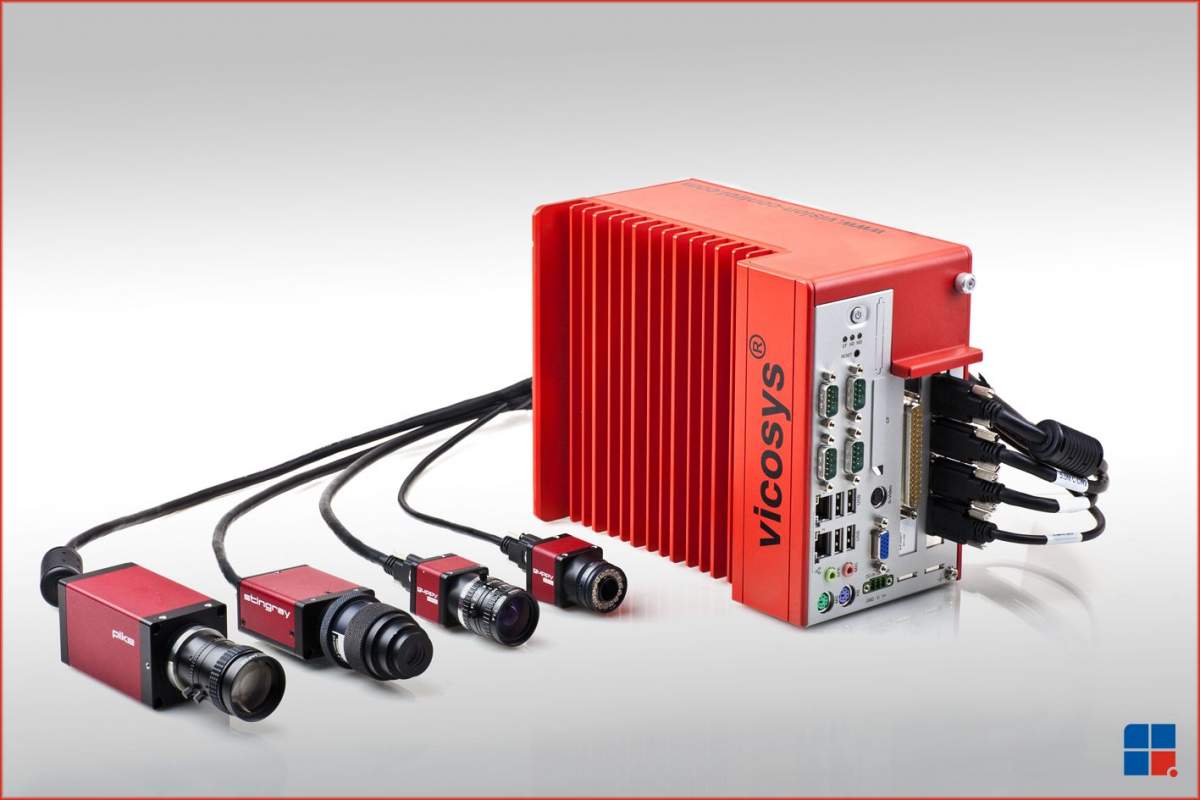
Some inspection problems are simply too complex for a single viewpoint. When a product needs to be seen from several angles at once, a multi-camera system can provide the coverage, speed and data needed to make the inspection reliable. At Fisher Smith, we design multi-camera systems that are built around the application, combining cameras, lighting, optics and software into one practical solution. We call ours, Genvis). Lighting is critical because the camera only sees what the light reveals, and smart cameras can also be the right fit when you need a compact, self-contained system with built-in processing and communications.
When one camera is not enough
Multi-camera systems are used when a part has too many surfaces, too much variation, or too many inspection points for a single camera to handle properly. By capturing several views at once, they can help inspect hidden features, complex shapes, labels, defects and assembly details more effectively. They are also a strong choice where throughput matters, because multiple views can be gathered in parallel rather than by moving the part through several separate stations.
Built around the right technology
Fisher Smith works across a range of machine vision approaches, from configurable smart cameras to freely programmable systems and PC-based vision. Smart cameras are often ideal when you want a compact, autonomous system with built-in image processing, while more complex applications may benefit from a centrally managed platform with multiple cameras and richer data handling. Deep learning can be added where the task needs judgement-based inspection, such as cosmetic checks, texture classification, variable feature location or difficult OCR.
Proven on demanding applications
Multi-camera systems come into their own on high-value, high-complexity projects. In one Fisher Smith medical plastics application, we developed a centrally managed inspection system using 25 individually networked cameras positioned across the production line, designed to collect as much data as possible from every frame and support complex deep learning inspection. That same project used flexible I/O to control lighting and build a system that could scale with the production line.
A separate TPL Vision case study showed the same principle in practice: Fisher Smith was tasked with the 360° inspection of a plastic surgical tool, using 25 cameras and eight modular M-EBAR bar lights arranged around the scene to remove shadows and capture even the smallest defects. The result was a detailed inspection system with uniform illumination, high data capture and the ability to meet strict medical industry requirements.
Why lighting matters
A multi-camera system is only as good as the images it captures. That is why lighting is not an afterthought at Fisher Smith. TPL Vision’s modular bar lights are designed to provide flexible, high-homogeneity illumination, and their angle changers allow the beam to be adjusted to suit the application. For high-speed and precision inspection, their high-power bar lights deliver very high brightness and consistent output, while other bar-light ranges are available for compact spaces, washdown environments and specialist inspection tasks.
What Fisher Smith can deliver
We can help you with:
If your product needs more than one viewpoint, Fisher Smith can help you build a system that captures the right data, simplifies inspection and performs reliably on the line.
Related components
Deep Learning
LED Lighting
Smart Cameras
GenVis Machine Vision Software

Download VCWin 2.21 (46MB) for all Vicosys and Pictor systems.
Fully backward compatible with older systems.
Suitable for Windows PCs using windows XP and newer - please contact us for older versions of windows
Vcwin pro 2.21 en Vcwin pro 2.21.1 setup