
How Do You Verify The Authenticity And Condition Of Obsolete Electronic Components At Goods In?
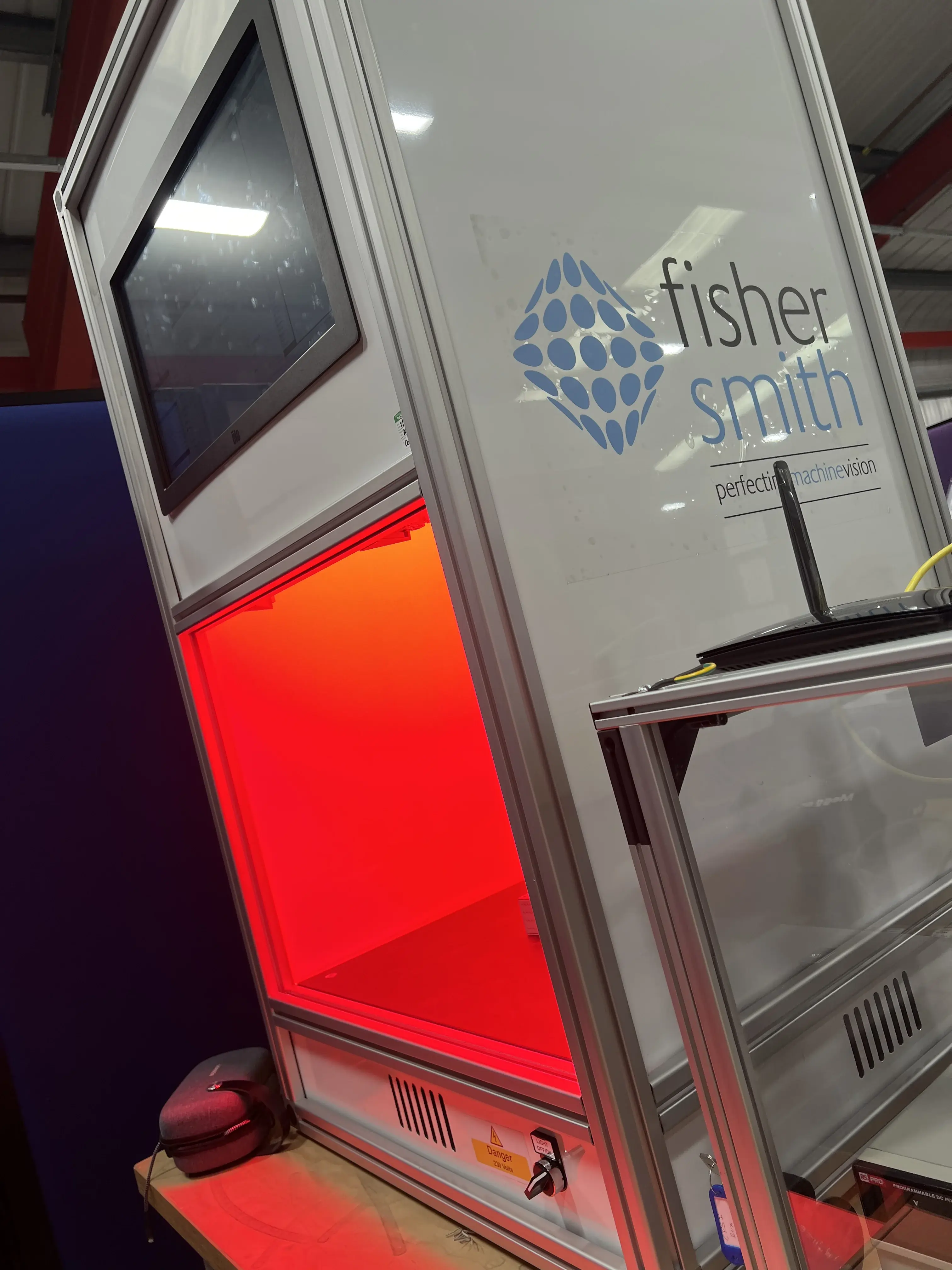
You build a human-assisted AI vision system that guides operators through a standardised inspection process, checks component condition and authenticity, and generates a traceable PDF report linked to an asset management database. Fisher Smith developed exactly this for a major UK defence and critical infrastructure operator managing obsolete and aftermarket electronic hardware.
The Problem: No Traceability For Aftermarket Components
The customer operates complex facilities that have been running for decades. Their control and automation hardware includes Allen Bradley and Rockwell PLC units that are no longer manufactured. When components fail, the only option is aftermarket, second-hand, or spares-and-repairs sourcing.
This creates three distinct risks. First, counterfeit components: the market for obsolete industrial automation hardware attracts fraudulent product that may not perform correctly in a safety-critical environment. Second, duplicate components: without a tracking system, it is possible to unknowingly hold multiple records of the same physical asset. Third, condition uncertainty: a second-hand PLC unit has an unknown service history, and its physical condition may not be evident without systematic inspection.
Before this system existed, none of those risks were being managed systematically. There was no documented process for logging aftermarket components at goods in, no AI-assisted condition checking, and no standardised reporting. As Reece puts it: "Before, I think nothing. They had no method of tracking, tracing, or logging the parts they were buying."
Why Was This Particularly Difficult To Solve?
Most machine vision applications present parts to cameras in a controlled way: a conveyor, a fixture, a robot. The part is in a known position, the background is consistent, and the system can be optimised accordingly. This application is fundamentally different.
Components arrive in various sizes, shapes, and conditions. An operator physically handles each item, placing it on an inspection table, turning it to present different faces, entering data about the component. The system has to work with human variability: components placed slightly off-centre, hands entering the field of view, parts being rotated mid-inspection.
"Overcoming the human element" was how Reece described the core engineering challenge. The system manages this by using live feedback: it continuously monitors for hand obstruction and component positioning and provides real-time guidance to the operator before each image is captured. The inspection only proceeds when the component is correctly positioned and the field of view is clear. Vision principles that would normally be enforced by mechanical fixturing are instead enforced by the system's feedback loop with the human operator.
How The System Works
The inspection station accommodates components up to approximately 500 by 600mm, covering the full range of hardware the customer handles. The operator places a component on the inspection surface. The system checks positioning and confirms the view is unobstructed. The operator captures images of each face in turn, with the system guiding the sequence. Throughout, the AI model assesses the component's condition and checks for visual indicators that may suggest the component is counterfeit, damaged, or unsuitable for use.
Once inspection is complete, the operator adds any relevant notes. The system generates a structured PDF report containing the captured images, inspection results, operator notes, and an asset reference. This report is integrated directly with the customer's asset management database, creating a permanent record against which the component can be traced throughout its service life. Crucially, the same inspection images that go into the report are also used to continue training the AI model, improving its accuracy over time with real in-service examples.
Why Was There No Off-The-Shelf Solution?
Standard goods-in inspection systems exist for well-defined, consistent products. They do not exist for the specific combination of requirements here: variable obsolete electronic hardware, human-operated inspection with real-time guidance, AI-assisted condition assessment, and integration with a bespoke asset database.
"There was no sort of standard to it," Reece observes. "That was the issue, I suppose, standardisation." Fisher Smith was introduced to the customer by Cognex, who recognised that this application needed bespoke integration expertise rather than an off-the-shelf product. The solution was developed collaboratively with the end users, with Fisher Smith iterating the user interface based on direct feedback from the operators who would use it daily. The result is a system designed around the realities of how people actually work, rather than an idealised workflow imposed from outside.
Wider Applicability
The customer requested that they remain unidentified. The sector, however, is one where this type of problem is widespread: any organisation managing long-lifecycle assets that depend on obsolete hardware faces the same challenge. Defence, aerospace, utilities, and other critical infrastructure operators routinely procure aftermarket components for systems that original manufacturers no longer support. The combination of traceability gap and counterfeit risk is common; the specific solution Fisher Smith built here is directly applicable to similar contexts. See the UK government's guidance on supply chain security for further context on managing component authenticity risks in critical infrastructure: https://www.ncsc.gov.uk/collec...
Key Takeaways
- AI-assisted condition checking at goods in provides a first line of defence against counterfeit and substandard aftermarket components
- Live positioning feedback guides operators to capture consistent images without mechanical fixturing
- Automated PDF reporting with asset database integration creates a permanent traceable record for each component
- Inspection images are used to continuously improve the AI model with real in-service examples
- The system was developed collaboratively with end users, ensuring the interface works for the people who use it daily
Frequently Asked Questions
What Size Of Components Can The System Handle?
The current installation handles components up to approximately 500 by 600mm, covering the range of hardware the customer manages.
What Does The AI Check For?
The AI model assesses physical condition and checks for visual indicators that may suggest a component is counterfeit, damaged, or has been previously repaired in a non-standard way. The model continues to learn from each inspection, improving its accuracy over time.
How Does The System Manage The Variability Of Human Operators?
Real-time feedback from the system guides operators to position components correctly before each image is captured. The inspection sequence cannot proceed until positioning is confirmed as acceptable, which enforces consistency without requiring mechanical fixturing.
Can The System Integrate With Existing Asset Management Systems?
Yes. In the current installation, reports are generated as structured PDFs and integrated directly with the customer's internal asset database. Integration requirements vary by customer and are scoped as part of the project.
If your organisation manages long-lifecycle assets that depend on obsolete or aftermarket components, and you need a documented, traceable goods-in inspection process, contact Fisher Smith to discuss how a bespoke AI inspection system could address your requirements.
Contact us to arrange your spring vision audit. Out with the old false rejects, in with the accurate reads.