
Can You Inspect Moulded Parts Without Slowing The Line Down?
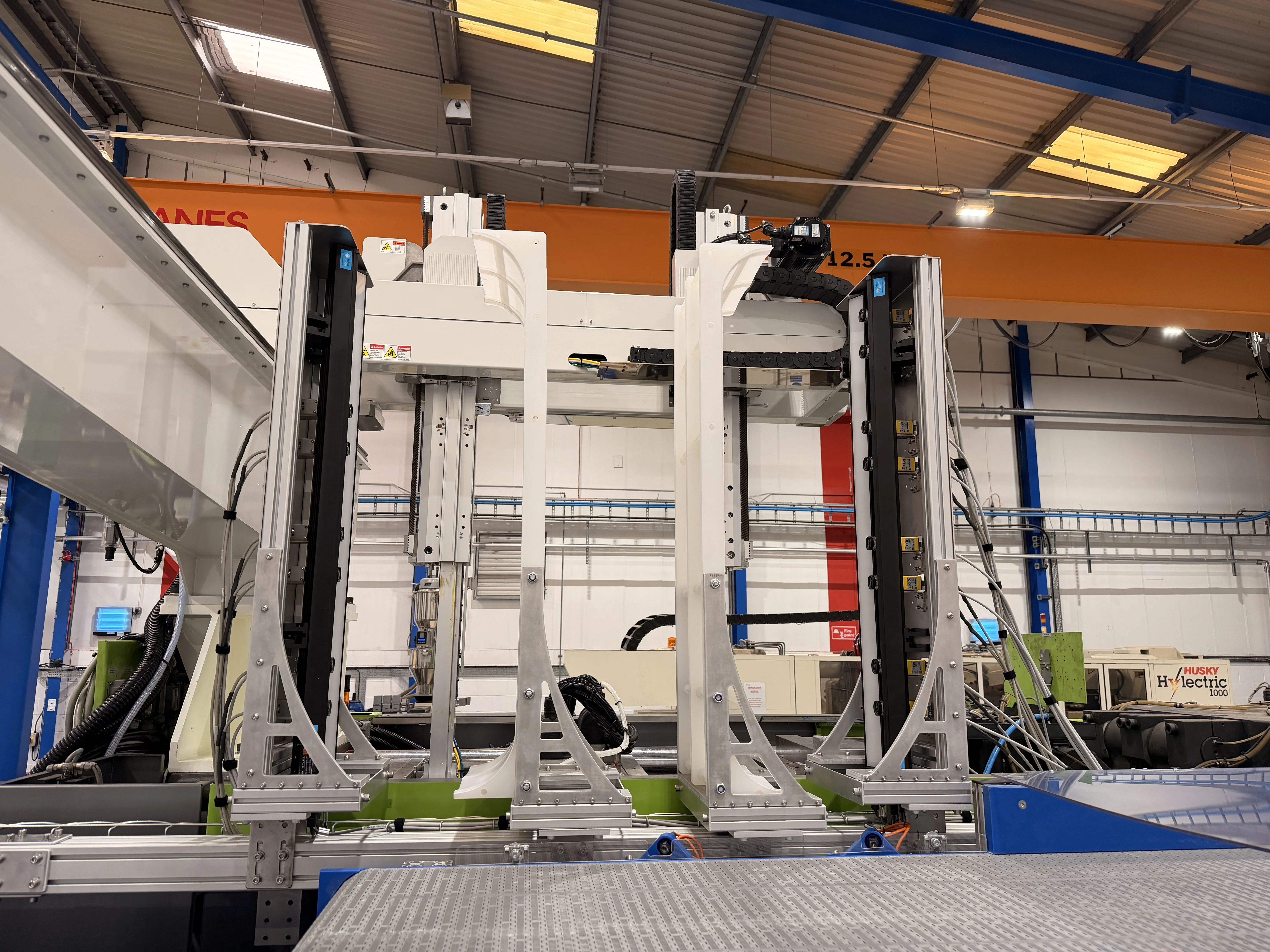
Yes. Fisher Smith's inline GenVis AI inspection system captures and analyses images of plastic moulded components as they leave the mould, at full production speed, with no additional handling equipment and no interruption to cycle time. Here is how it works, and why it solved a problem that conventional vision systems could not.
The Problem: Missing Plastic Reaching Consumers
A UK plastic packaging manufacturer was producing a high-volume consumer product in a multi-cavity injection moulding process. The parts are small, produced in large quantities across sixteen cavities per cycle, and destined for a product used by children. When the moulding process goes wrong, the result is a "short shot": a component where insufficient plastic has filled the mould, leaving the part incomplete.
Incomplete parts reaching consumers prompted serious customer complaints. For a product handled by children, even a small piece of missing plastic triggers immediate concern. The manufacturer needed a reliable way to detect short shots before products left the facility.
Why Couldn't They Solve It Internally?
Their existing approach was blunt: reject the first five shots after every machine stop as a precaution, and rely on operators to visually inspect the remainder. Neither method was adequate. Blanket rejection of post-stop shots generated unnecessary scrap. Manual inspection at production speed is unreliable and expensive.
The more fundamental barrier was space. This manufacturer runs multiple moulding machines in a busy facility, with very little room between equipment. The conventional solution to inline part inspection is to single-file components onto a separate conveyor, add a second handling robot to present parts individually to a camera, and inspect from a known position. That approach requires floor space and capital investment that simply was not available.
The Fisher Smith Approach: Inspect On The Gripper
"This is quite unique," says Radu Cretu, Fisher Smith's vision engineer who led the project. "Normally you place parts down and process them through a lot of additional automation. We've pretty much eliminated the second conveyor and the second robot just by doing it on the initial demoulder."
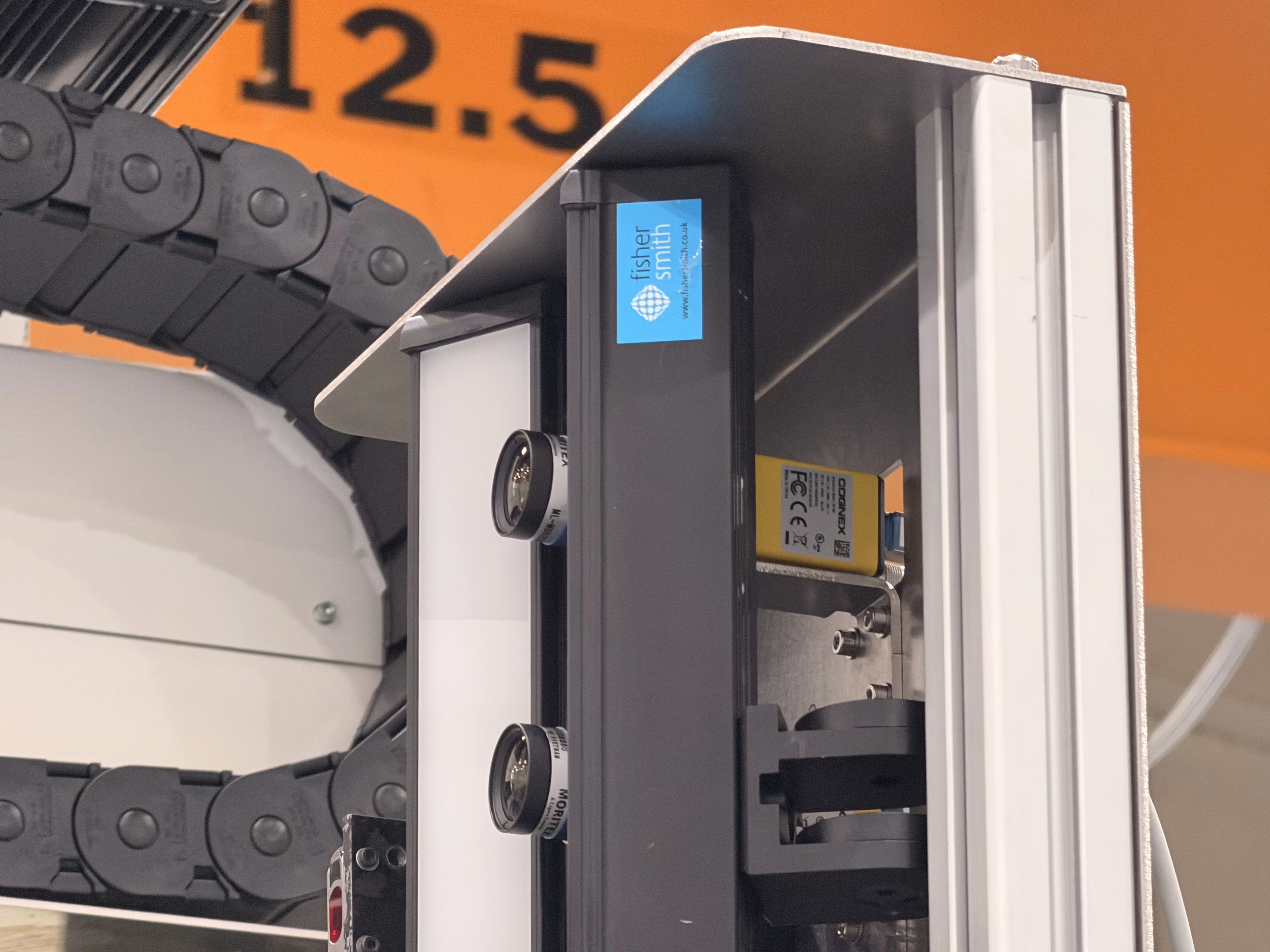
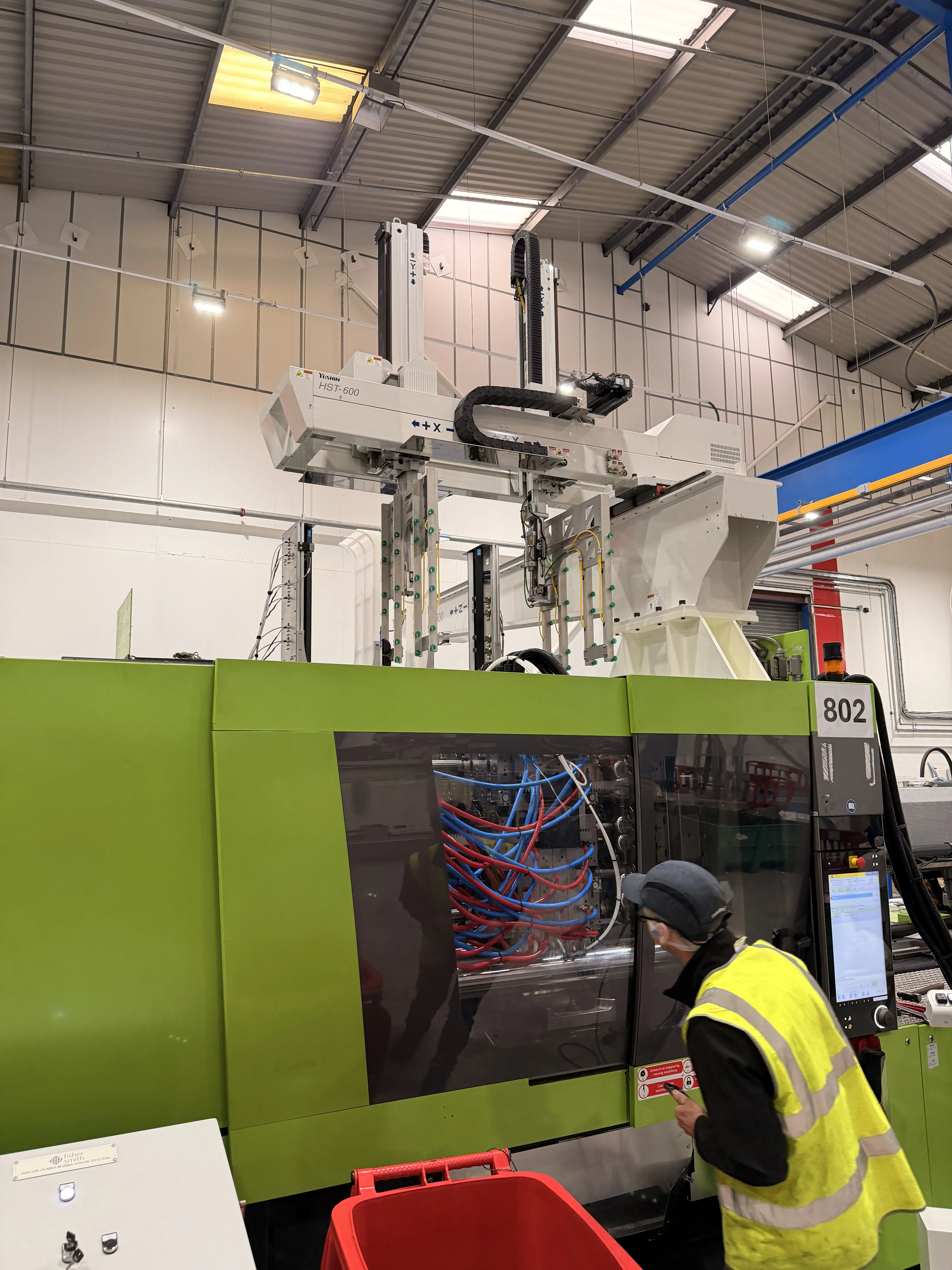
A demoulder is a multi-axis gantry robot that enters the open mould using suction cups to extract the hot plastic parts immediately after moulding. Fisher Smith's solution mounts cameras and lighting directly into the demoulder's trajectory. As the gripper moves parts at full speed from mould to downstream process, the GenVis system captures images of all sixteen cavities across four passes, processes the results, and delivers a pass or fail decision before the gripper completes its cycle.
No additional equipment. No changes to the existing process. No modifications to the demoulder or the PLC. A bolt-on system that works within the existing machine footprint.
Why Did AI Make The Difference Here?
The inspection environment is challenging. The demoulder's gripper forms the background against which parts are imaged, and it is neither flat nor uniform. Traditional rule-based vision systems rely on consistent backgrounds and known part positions. On a moving gripper with a complex mechanical structure behind the parts, that consistency cannot be guaranteed.
AI-based detection trained on actual production images learns to identify what a complete part looks like regardless of the background. It also adapts as products evolve, which is valuable given that mould tools change over time.
The system also uses what Radu describes as a key efficiency: "Because we have the processing power of a PC, we can reuse the same cameras four times in quick succession rather than having a dedicated camera for each part. In a traditional approach at equivalent speed, you'd be multiplying the number of cameras by four." Sixteen cameras do the work that a conventional fixed system would need sixty-four to match.
What Results Has It Delivered?
The system has just entered production. Early feedback is positive: short shots that are very small, previously undetectable by manual inspection, are being caught reliably. The data captured also gives the production team something they did not have before: ongoing analytics on mould performance. Rather than simply producing pass or fail results, the AI model can identify emerging patterns in cavity performance, giving engineers early warning of mould issues before they generate significant scrap.
"It's not just a reject gate," says Radu. "The analytical data can tell you how the mould is performing over time, which supports both preventative maintenance and process reviews."
Could This Be Applied Elsewhere?
Retrofitable to existing demoulders. Capable of handling multiple mould tools and product variants from a single system. Able to retrain when mould tools change. The application addresses a genuine gap in the market: high-volume, multi-cavity moulding operations that need inline inspection but cannot justify the cost or footprint of traditional handling-plus-vision setups.
Key Takeaways
- ● Inline AI inspection during demoulding eliminates the need for additional handling equipment
- ● Sixteen cameras cover sixty-four part positions by reusing cameras in rapid succession
- ● AI detection works reliably despite inconsistent backgrounds caused by the gripper structure
- ● The system is a bolt-on retrofit requiring no changes to existing equipment or PLC
- ● Analytics data supports mould performance monitoring and preventative maintenance
Frequently Asked Questions
Does The System Interrupt The Production Cycle?
No. Inspection occurs as the demoulder moves parts at full speed. There is no additional dwell time, no pausing, and no change to cycle time.
Can The System Handle Different Products From The Same Machine?
Yes. The AI model can be trained on multiple product variants and can learn new products if mould tools change. The system is not locked to a single part type.
What Happens When A Defective Part Is Detected?
The system outputs a pass or fail result in time for downstream rejection. The specific rejection mechanism is integrated with the customer's existing process.
Why GenVis Rather Than A Smart Camera System?
A smart camera system could potentially handle the imaging, but PC-based GenVis provides the processing power to reuse cameras across multiple passes, run AI models reliably at full speed, and output analytics data. It also offers better long-term maintainability and adaptability as product requirements evolve.
If your moulding operation is producing defects that manual inspection cannot reliably catch, and you do not have the floor space or budget for a traditional handling-plus-inspection setup, talk to Fisher Smith about inline demoulder inspection. Contact our team to discuss your application.
Contact us to inspect your line.